- Niseko Trash Guide for Foreigners (Kutchan vs Niseko)
- Local Tips in Kutchan: Supermarket Recycling Boxes
- Coop Sapporo (Kutchan): Recycling box
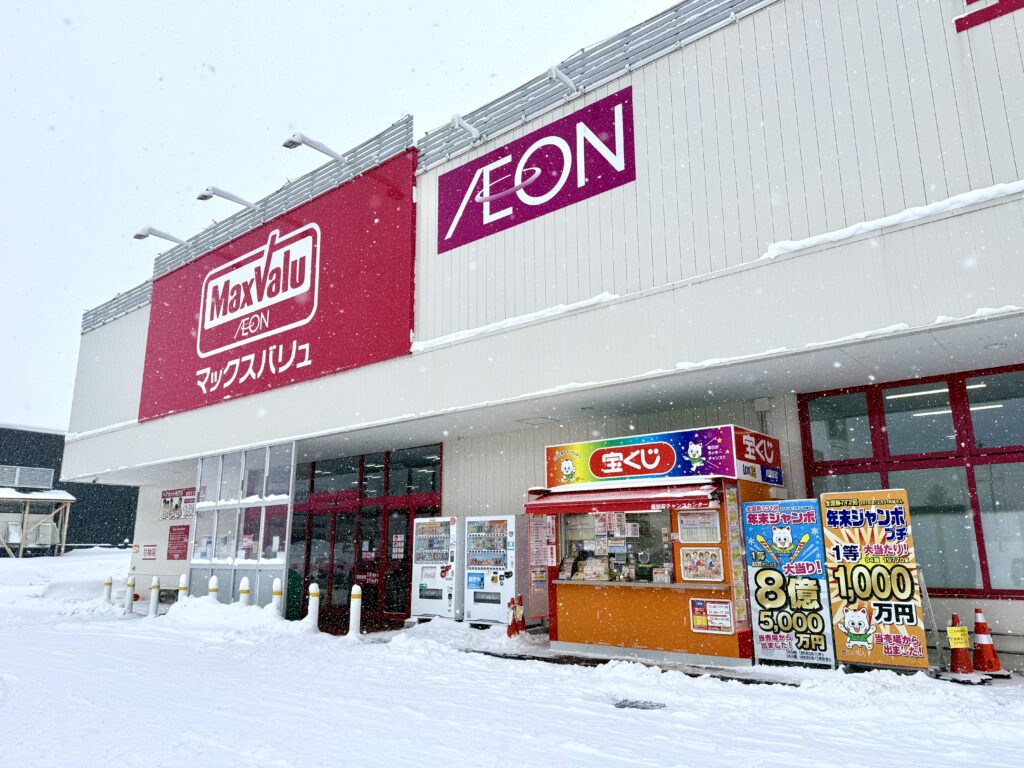
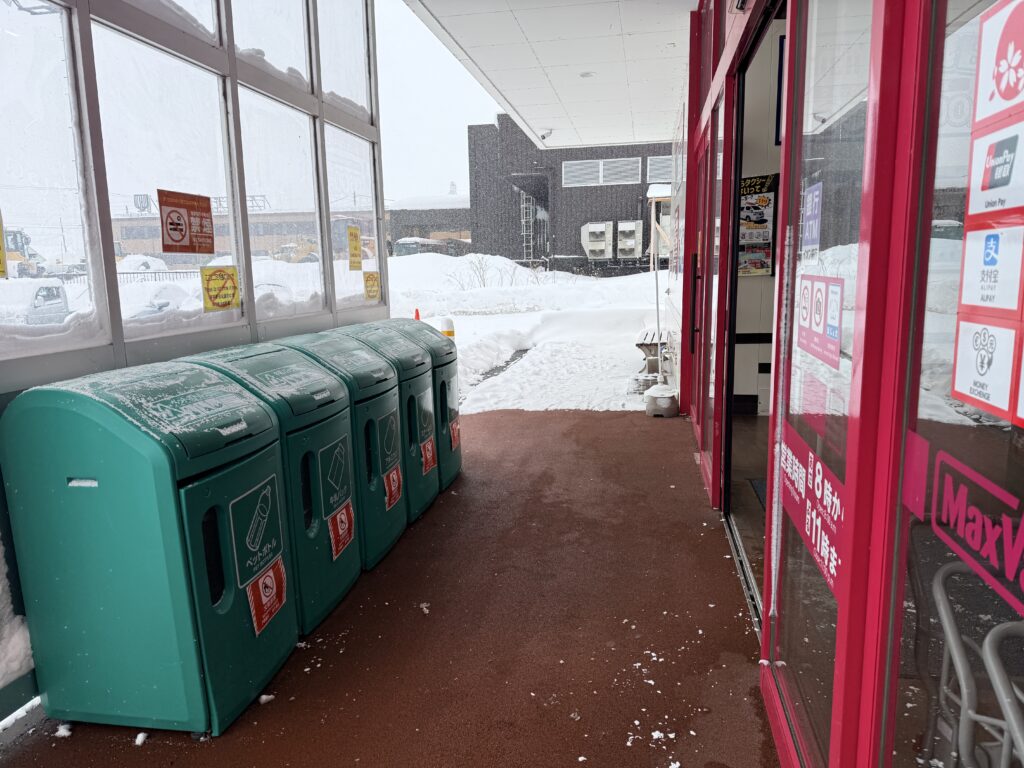
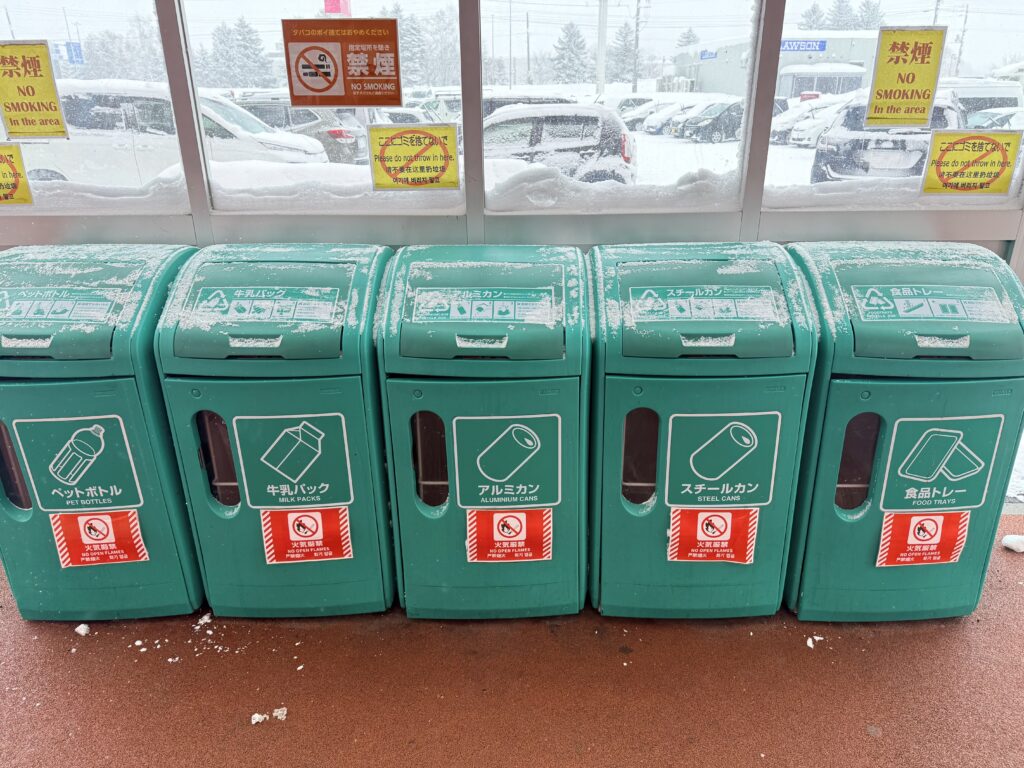
- MaxValu (Kutchan): Recycling box
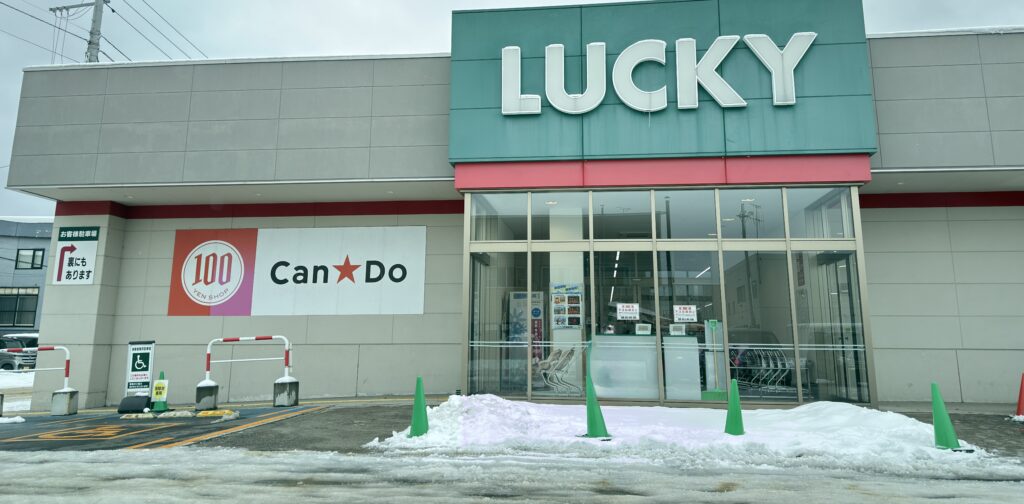
- Lucky (Kutchan): Recycling box
- Airbnb / Minpaku Tip: Bins Are Often “Easy to Sort”
- Niseko Town Office Tip: Free Garbage Guide (Sometimes Available)
- Extra Tips: Bag Prices & Apps (Long Stays / Hosts)
Niseko Trash Guide for Foreigners (Kutchan vs Niseko)
Rules, official bags, sorting, and where to dump
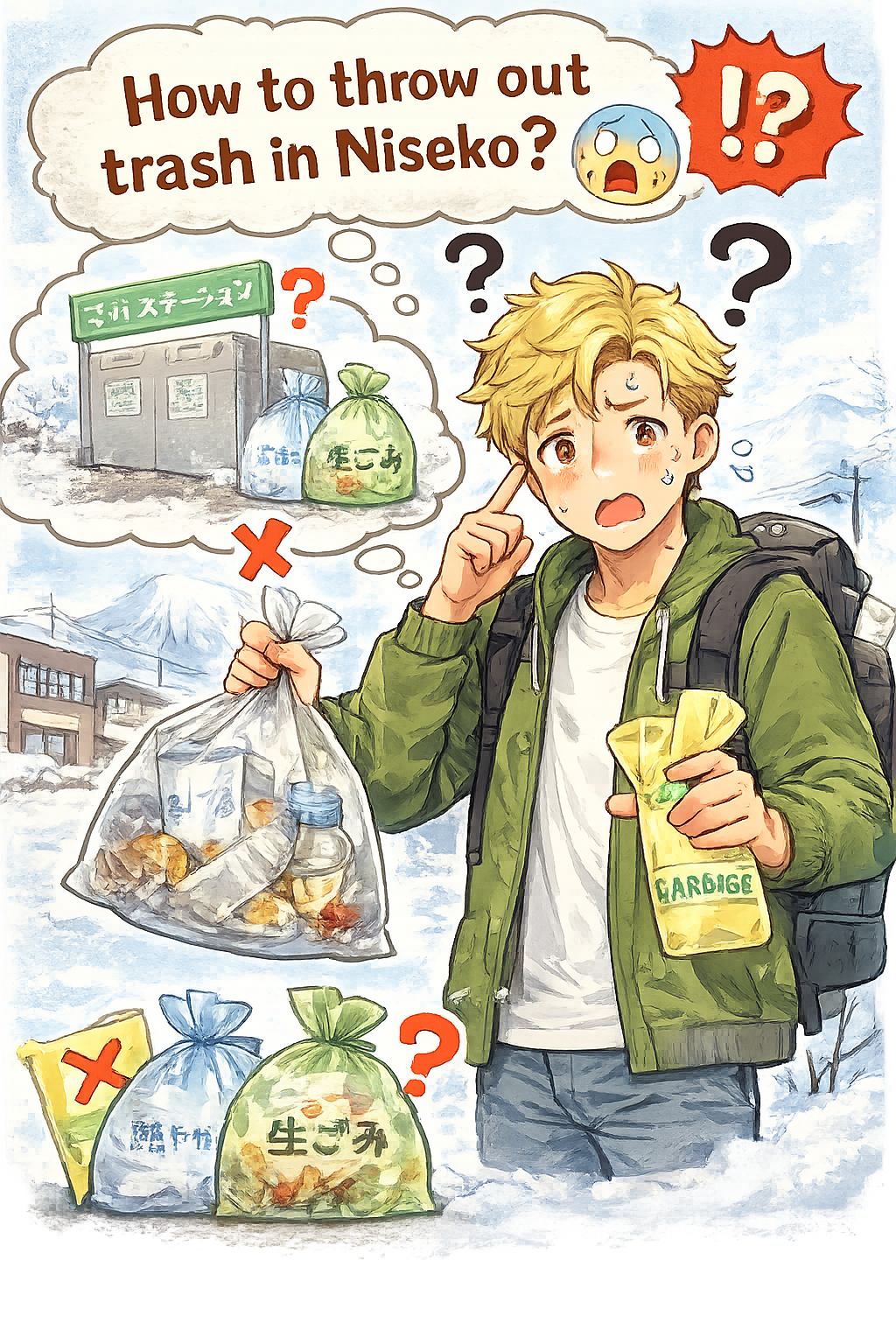
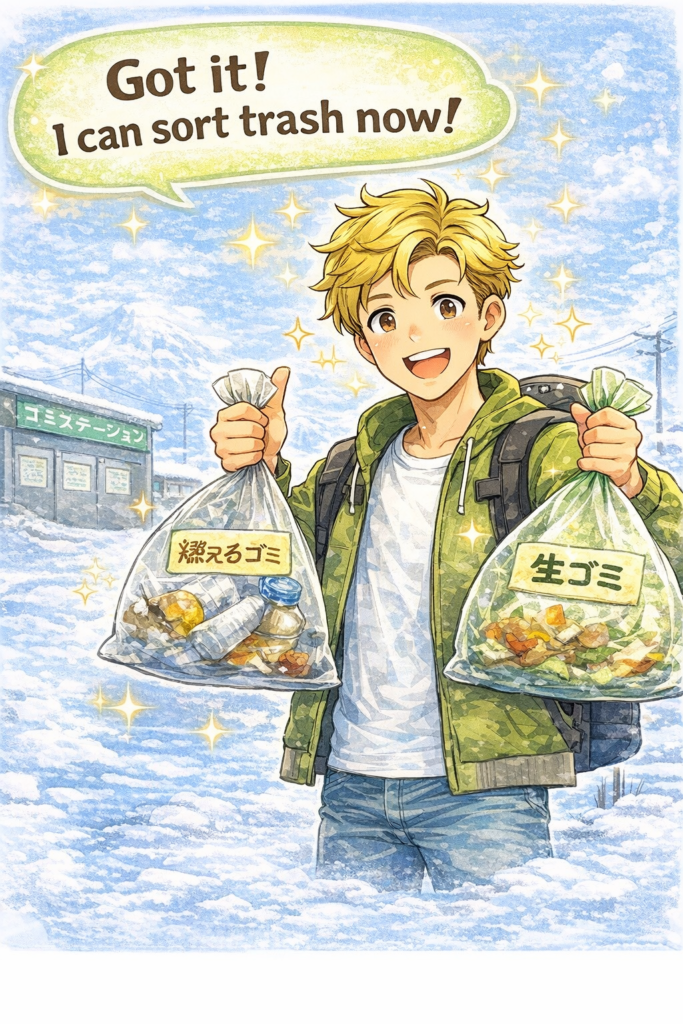
“I don’t know how to throw out trash… 😱💦”
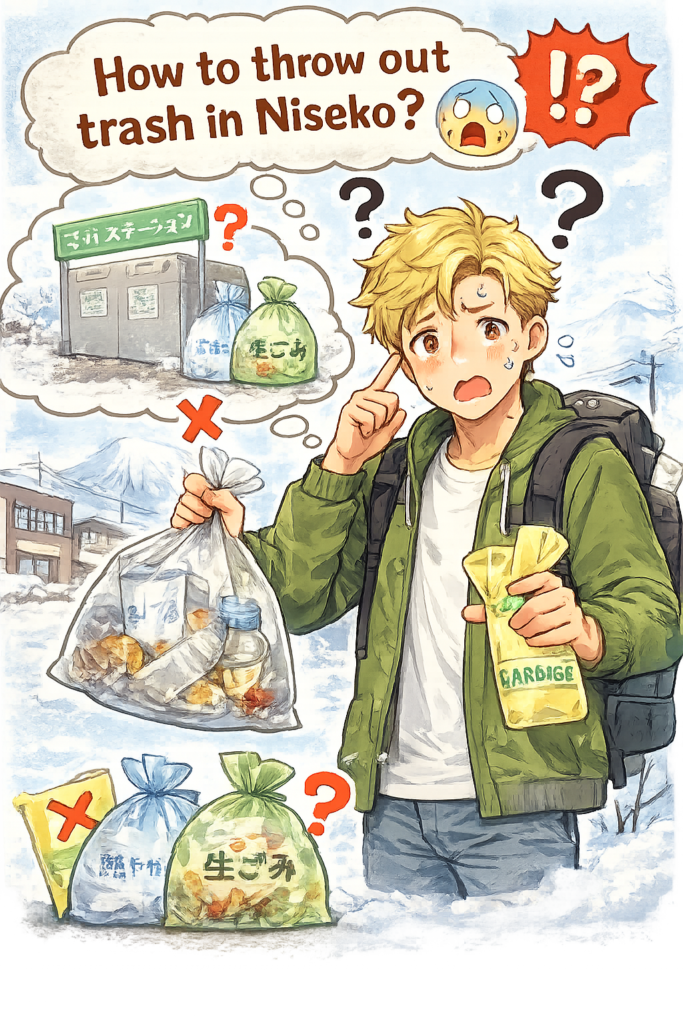
If this is your first time in Niseko, you’re not alone. Japan’s trash rules can feel like a totally different rulebook.
Typical questions that cause stress fast:
• Where do I throw it away? • Is this the correct official bag? • Is food waste separate?😱💦
In this guide, I summarize the official rules only (Kutchan Town & Niseko Town), so you can act with confidence. By the end, you’ll think: “Okay, I can do this.”
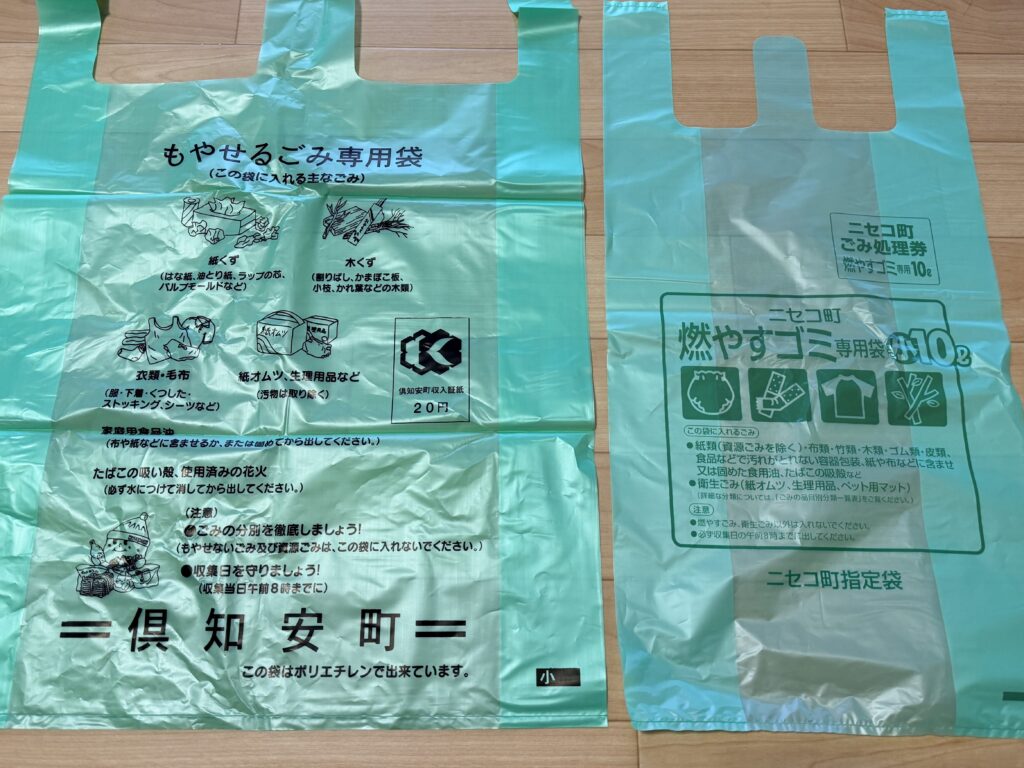
Super important Kutchan Town and Niseko Town are neighboring—but rules and official bags differ.
Step 1 is always: confirm which town your accommodation address belongs to.
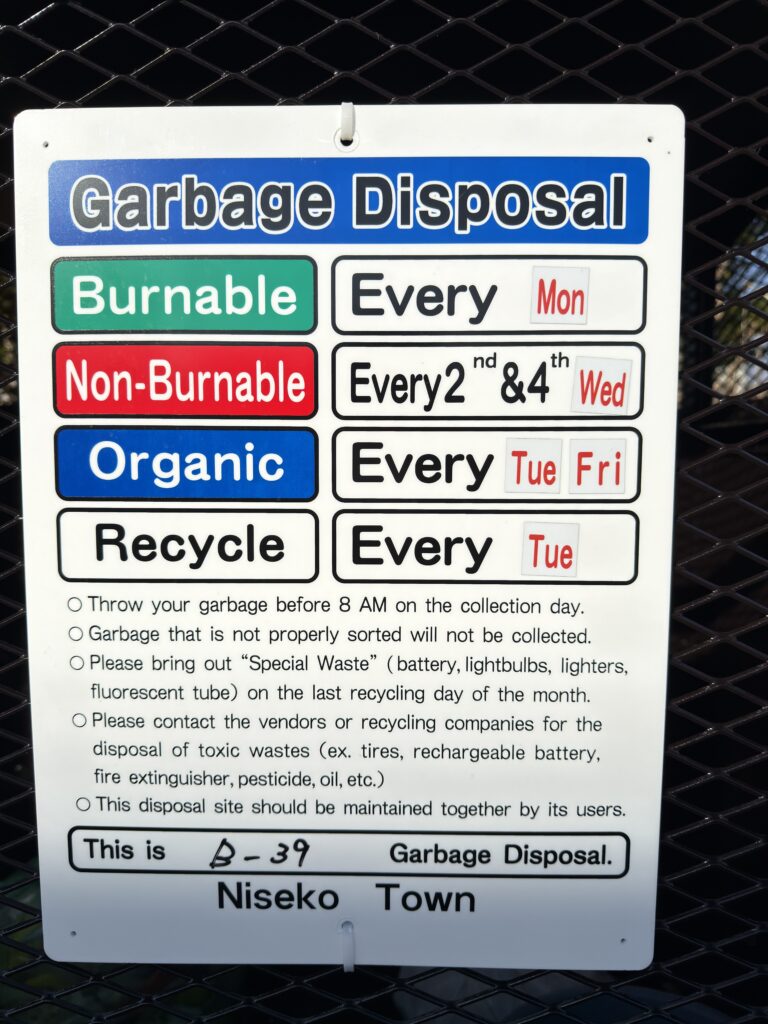
- There are very few public trash bins (you can’t “just throw it away somewhere”).
- Official designated bags are required (and they differ by town).
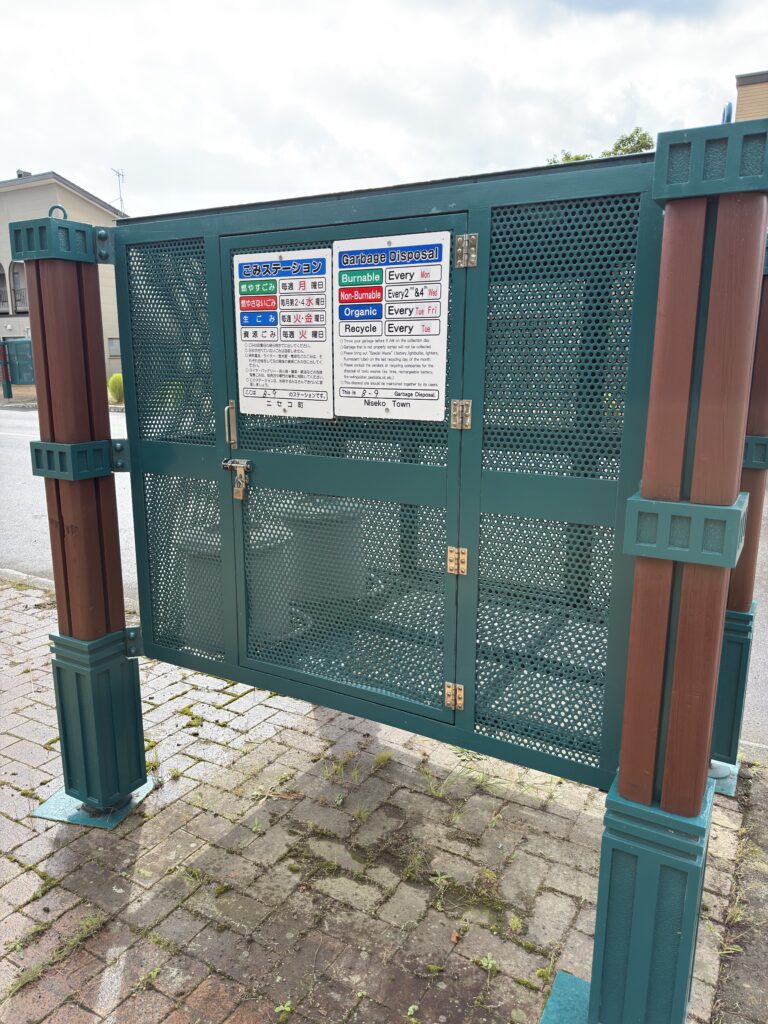
- Collection days + trash stations are fixed (and Niseko differs by area A–D).
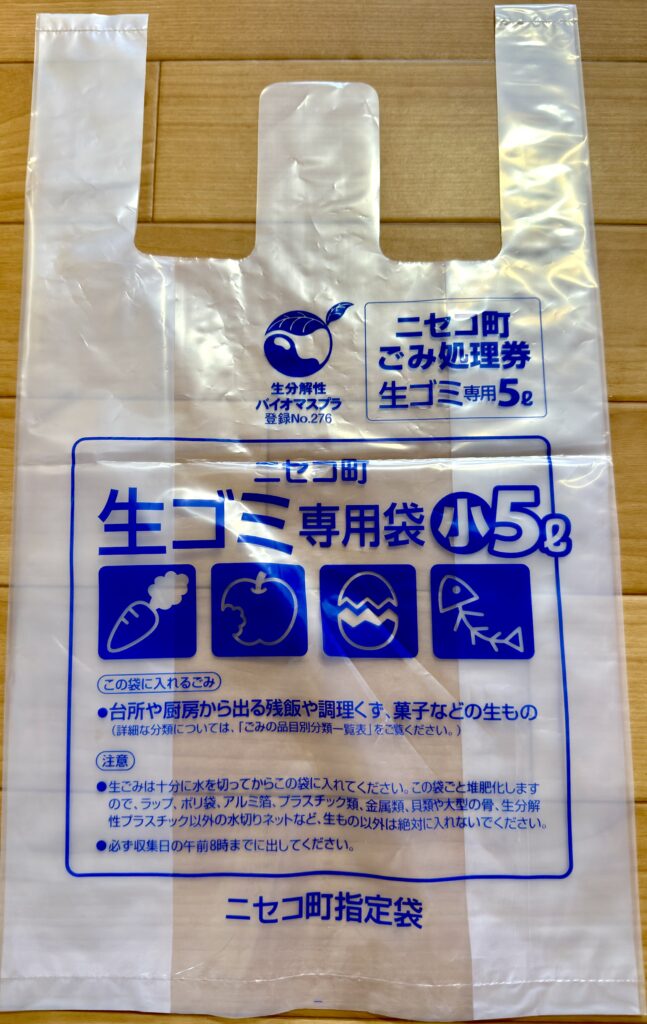
- Food waste (nama gomi) is often collected separately.
In many countries, “everything goes into one bin.” In Niseko/Kutchan, it’s a different system—so confusion is normal.
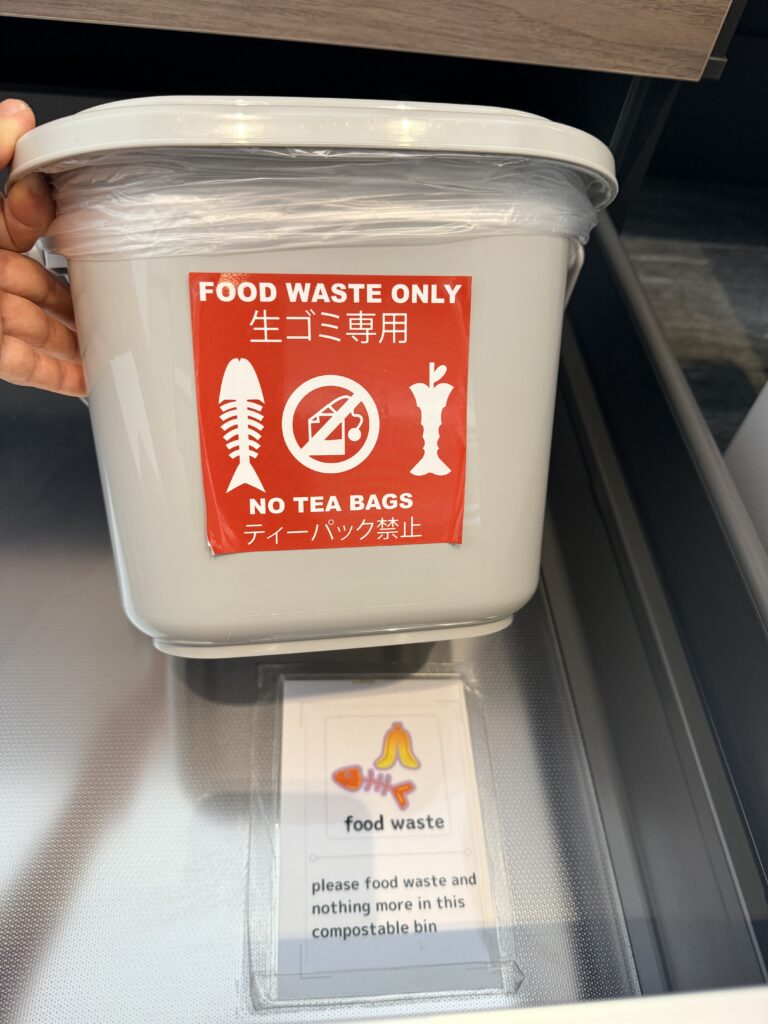
From today, do only this:
- Confirm the town: Kutchan or Niseko
- Find your building’s trash station (host / management guide)
- Food waste only = separate bag (prevents most “not collected” issues)
This simple set covers most real-life situations.
Kutchan Town (fees + official bag shop list):
Official page
Niseko Town (official bag prices):
Official page
▼ Q1 Is food waste (nama gomi) different from burnable trash?
Yes. In many cases, food waste is separated. This is the #1 cause of “not collected.”
If you remember only one rule: keep food waste in a separate bag.
▼ Q2 Where do I throw trash? Can I use another station?
Use your building’s designated trash station.
Do not use other stations unless your host says it’s allowed.
▼ Q3 I missed collection day—what should I do?
▼ Q4 I have a LOT of trash (moving / long stay). Any option?
Kutchan has the Clean Center option. Check rules & hours:
Official guidance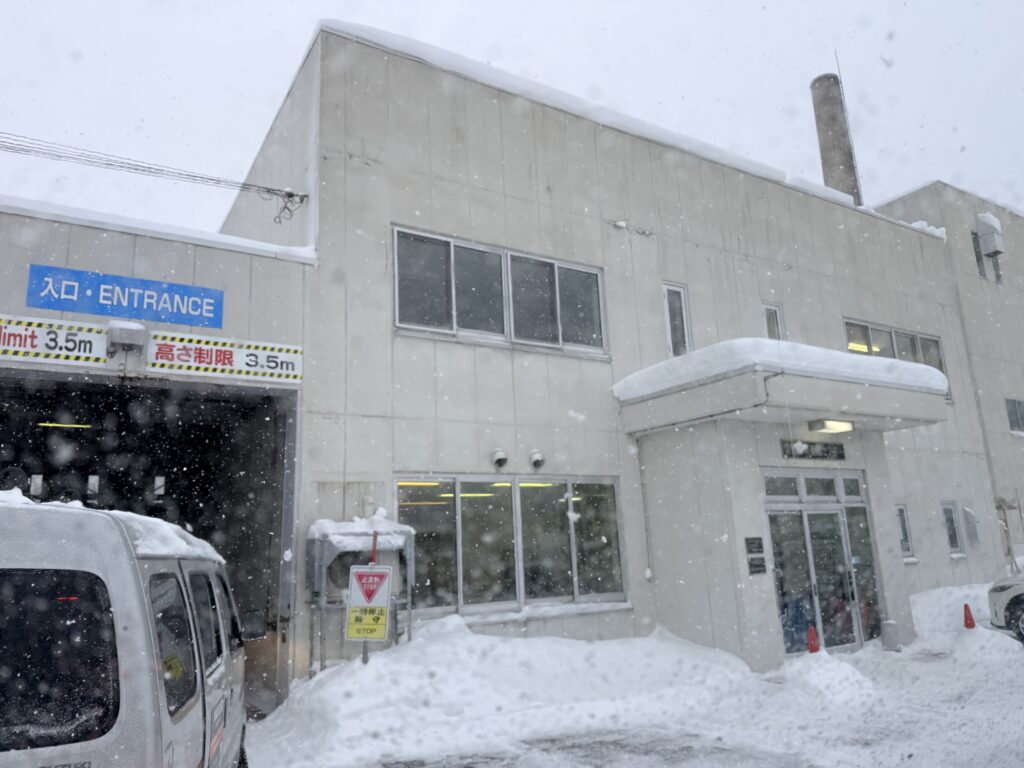
If there is moving-level garbage, this is it! Entrance to the Kutchan Town Cleaning Center↑
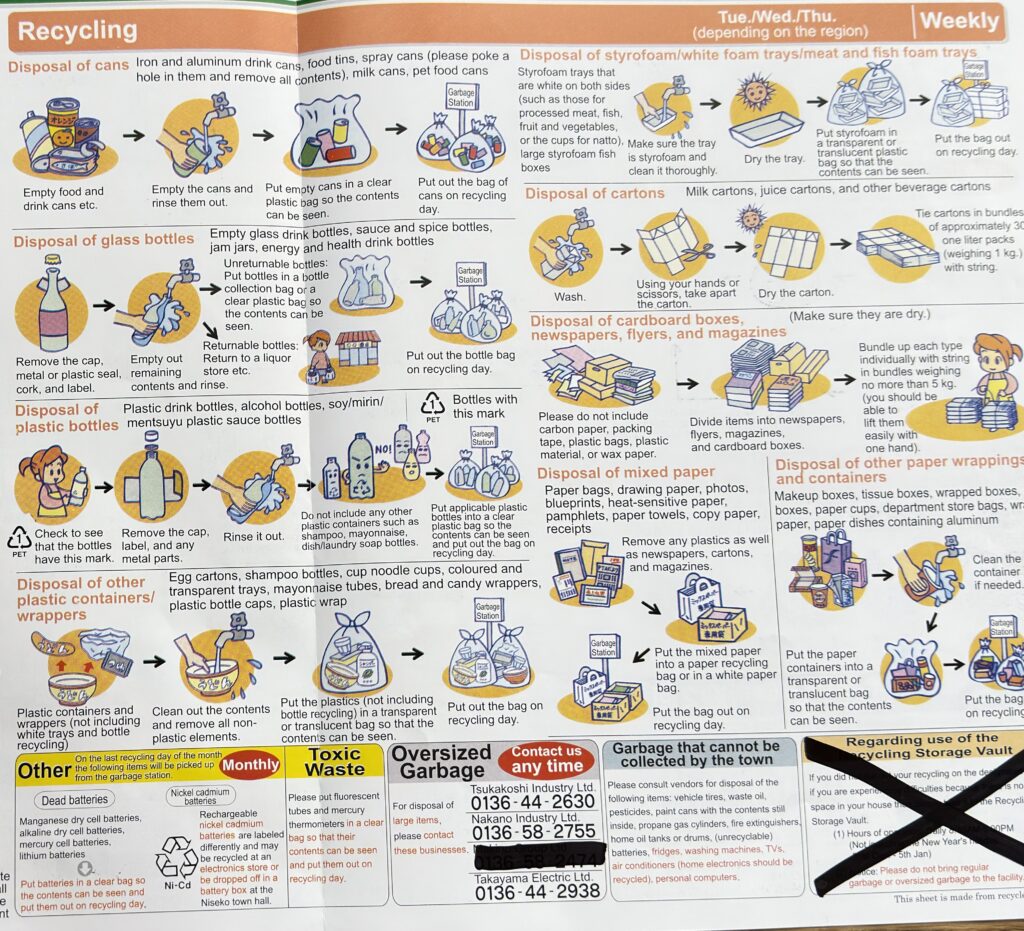
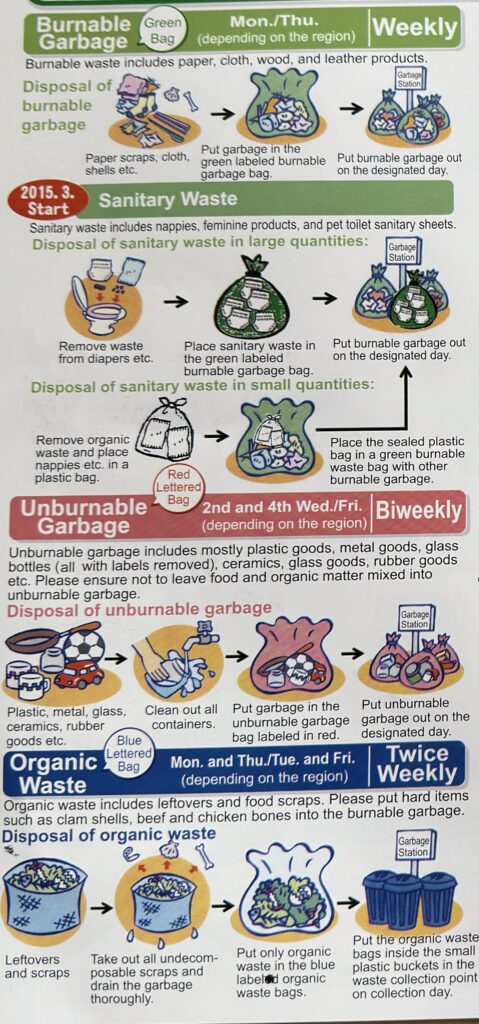
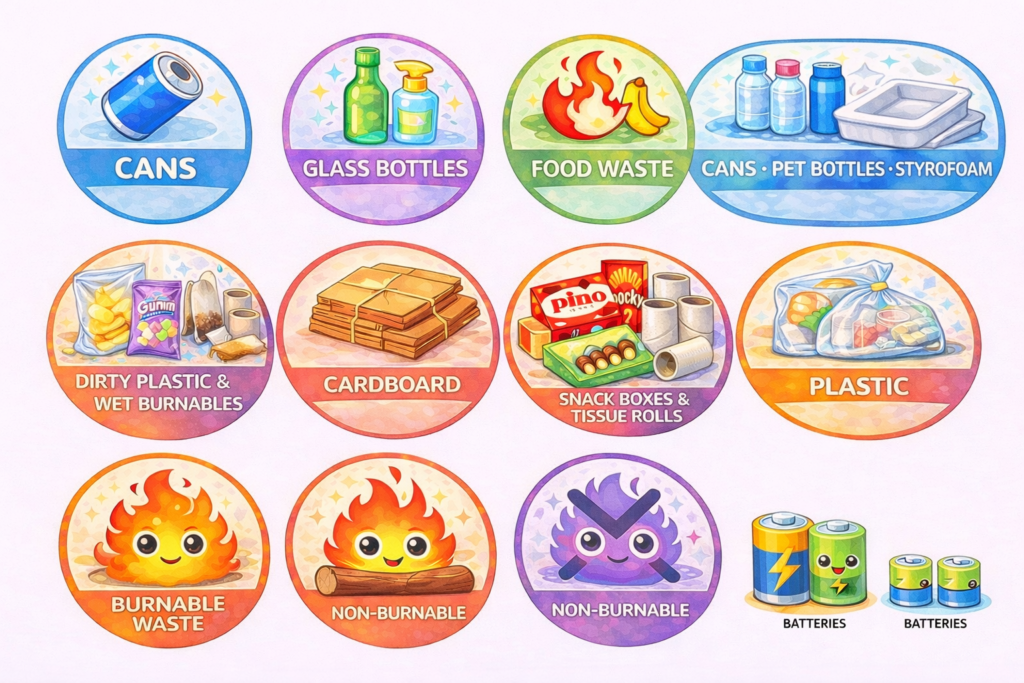
▶ 1) PET bottles
Remove cap & label, rinse, then recycle.
▶ 2) Cans
Rinse lightly. Separate if required by local rules/store boxes.
▶ 3) Glass bottles
Rinse. If broken, treat as “broken items” safely.
▶ 4) Broken glass / ceramics
Wrap in paper to prevent injury. Follow non-burnable rules.
▶ 5) Batteries
Hazardous. Do not mix into burnable trash.
▶ 6) White foam trays
Clean if possible and use store collection boxes (if available).
▶ 7) Leftovers in containers
Empty and rinse. Leftovers often cause “not collected.”
▶ 8) Aluminum foil
If very dirty, treat as burnable. If clean, follow local rules.
▶ 9) Spray cans
Use up contents first. Details vary—check official guidance.
▶ 10) Cardboard
Flatten and tie. Keep it dry (snowy days matter).
Local Tips in Kutchan: Supermarket Recycling Boxes
Local memoSupermarket recycling boxes can be a lifesaver.
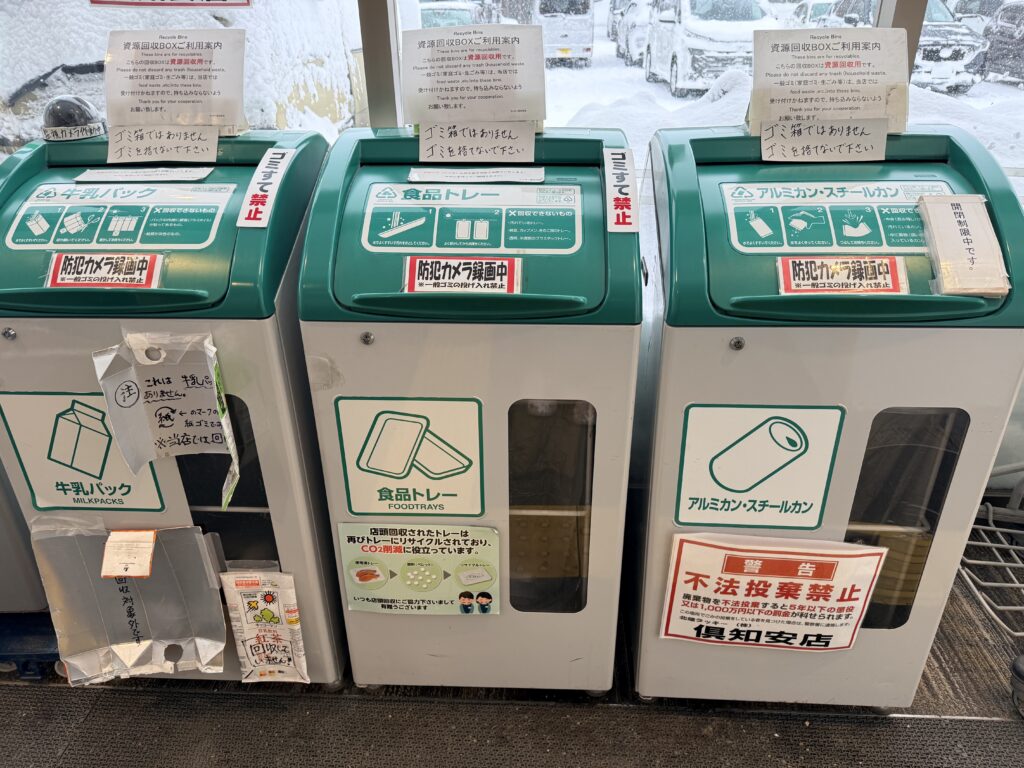
In Kutchan, some supermarkets may accept items like milk cartons, white trays, cans, and PET bottles.
Accepted items can change by store/season—always follow the posted signage at the store.
| Store (Kutchan) | Accepted (example) |
|---|---|
| Coop | Milk cartons / white trays / cans / PET bottles |
| MaxValu | Milk cartons / white trays / cans / PET bottles |
| Lucky | Milk cartons / white trays / cans |
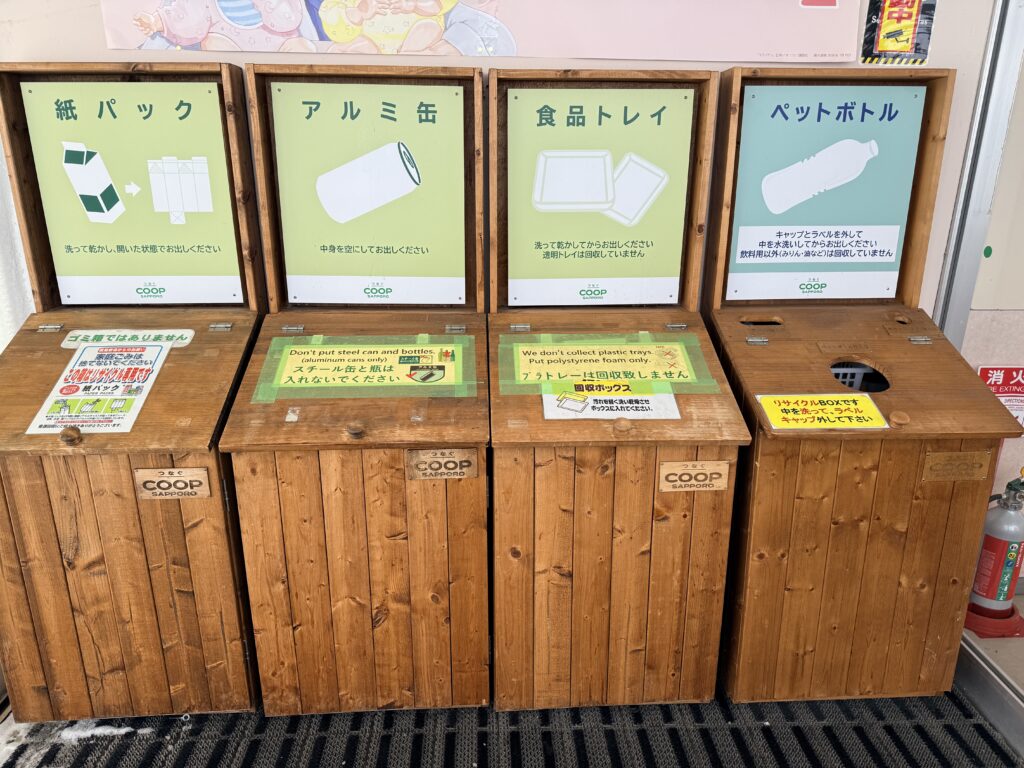
Coop Sapporo (Kutchan): Recycling box
What you may be able to recycle here (example):
- Milk cartons
- White food trays
- Cans (aluminum / steel)
- PET bottles
Final rules depend on the store’s posted labels at the boxes🗑️
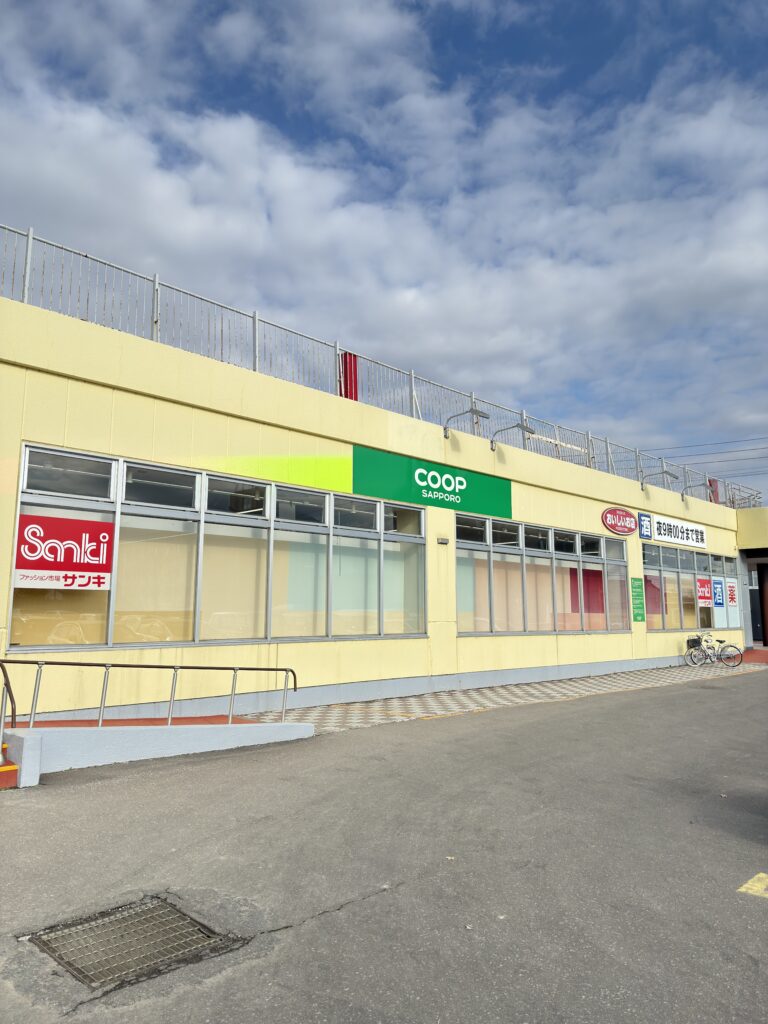
↑Coop Sapporo 2st floor↑
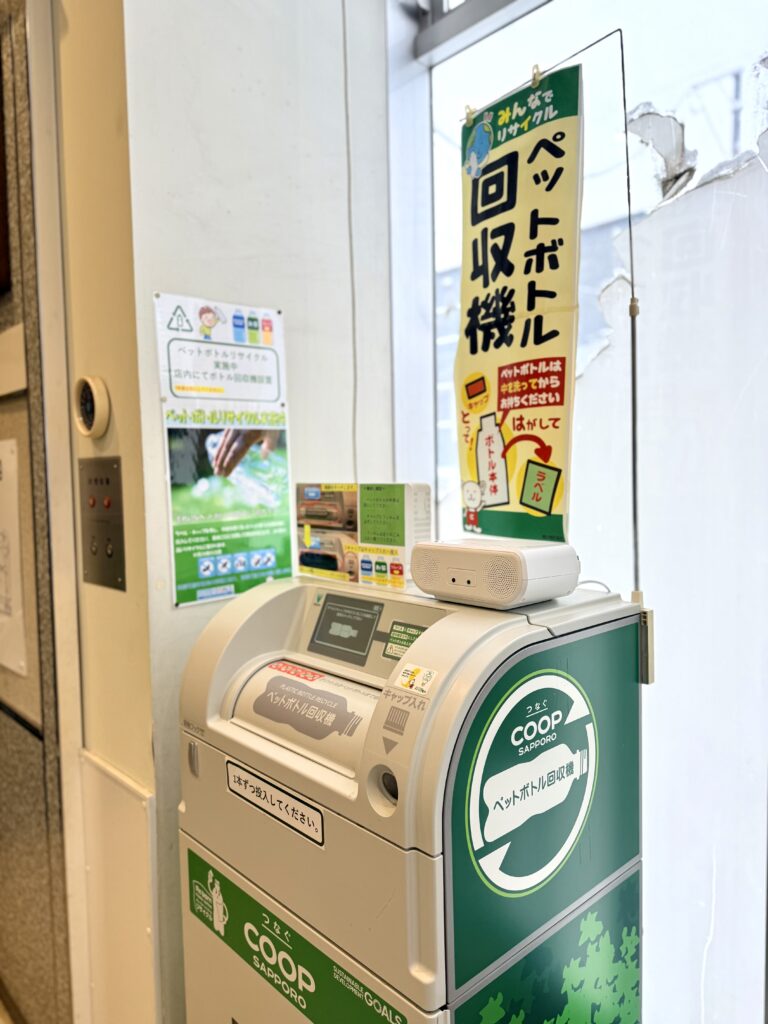
↑Plastic bottle collection machine1st floor↑
MaxValu (Kutchan): Recycling box
What you may be able to recycle here (example):
- Milk cartons
- White food trays
- Cans (aluminum / steel)
- PET bottles
Final rules depend on the store’s posted labels at the boxes🗑️
Lucky (Kutchan): Recycling box
What you may be able to recycle here (example):
- Milk cartons
- White food trays
- Cans (aluminum / steel)
Final rules depend on the store’s posted labels at the boxes🗑️
TipBest habit: rinse items lightly and follow the box labels.
If a label is only in Japanese, your phone camera translate works great.
Airbnb / Minpaku Tip: Bins Are Often “Easy to Sort”
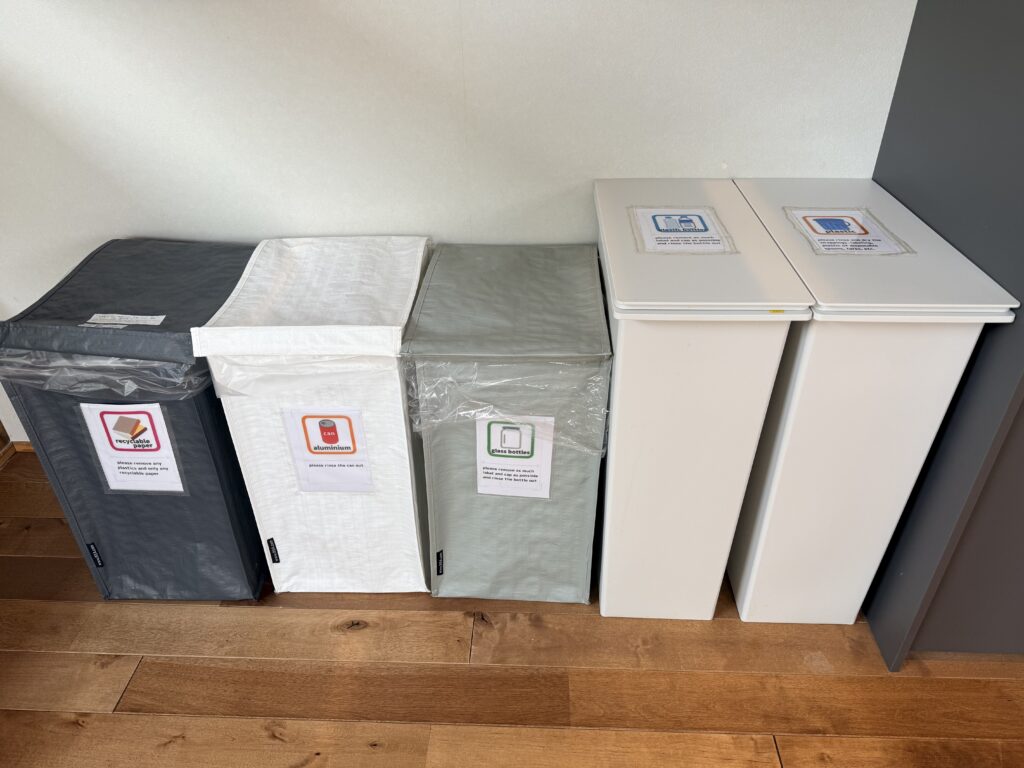
Common in NisekoMany places set up bins in a “no-confusion” layout.
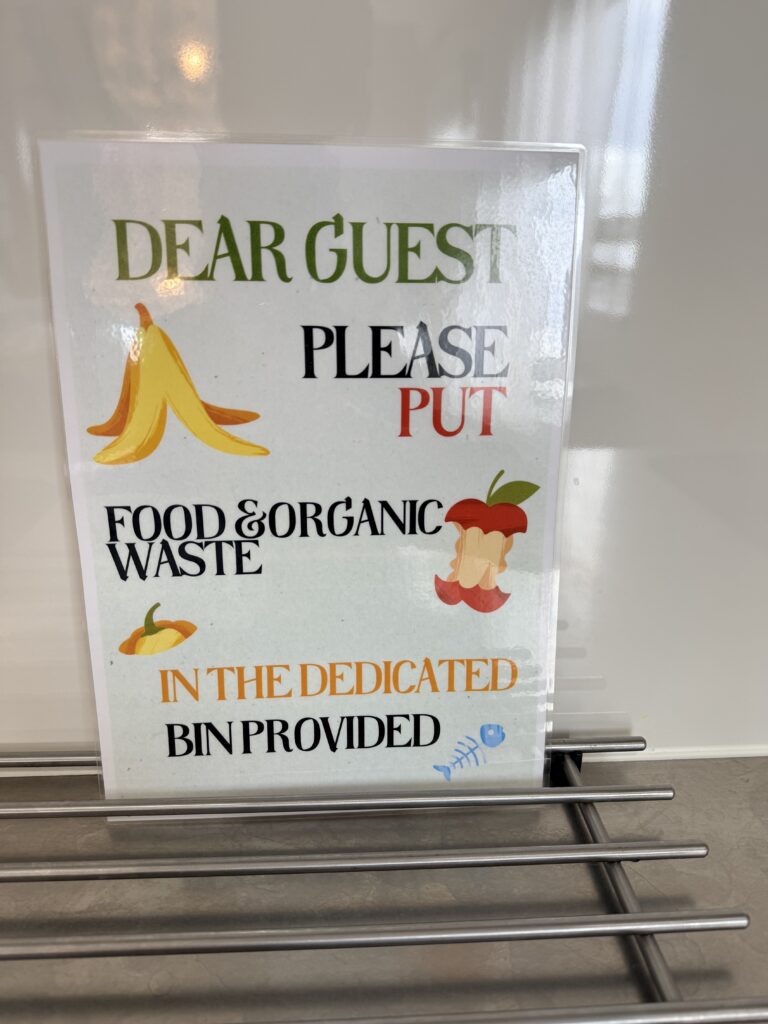
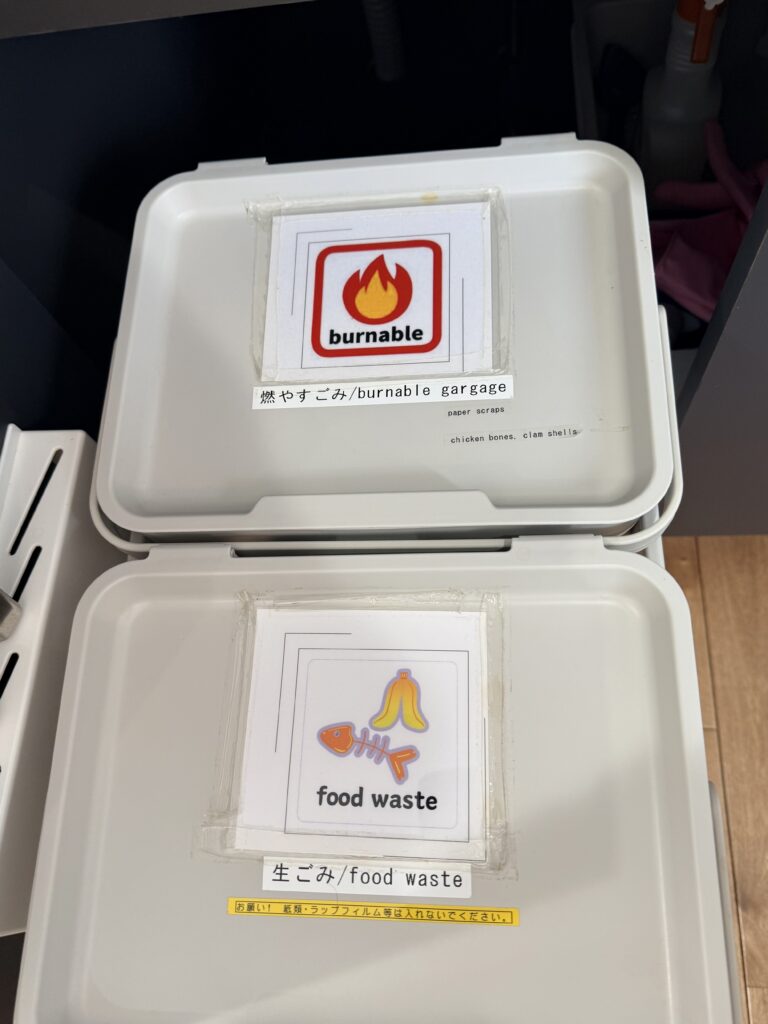
- Bins are often lined up side-by-side (less confusing).
- Daily trash (burnable / food waste) and recyclables are grouped together.
- Labels often show Japanese + English — if you follow the label, you’re usually fine.
If your place has labels, don’t overthink it — the label is your best guide.
Niseko Town Office Tip: Free Garbage Guide (Sometimes Available)
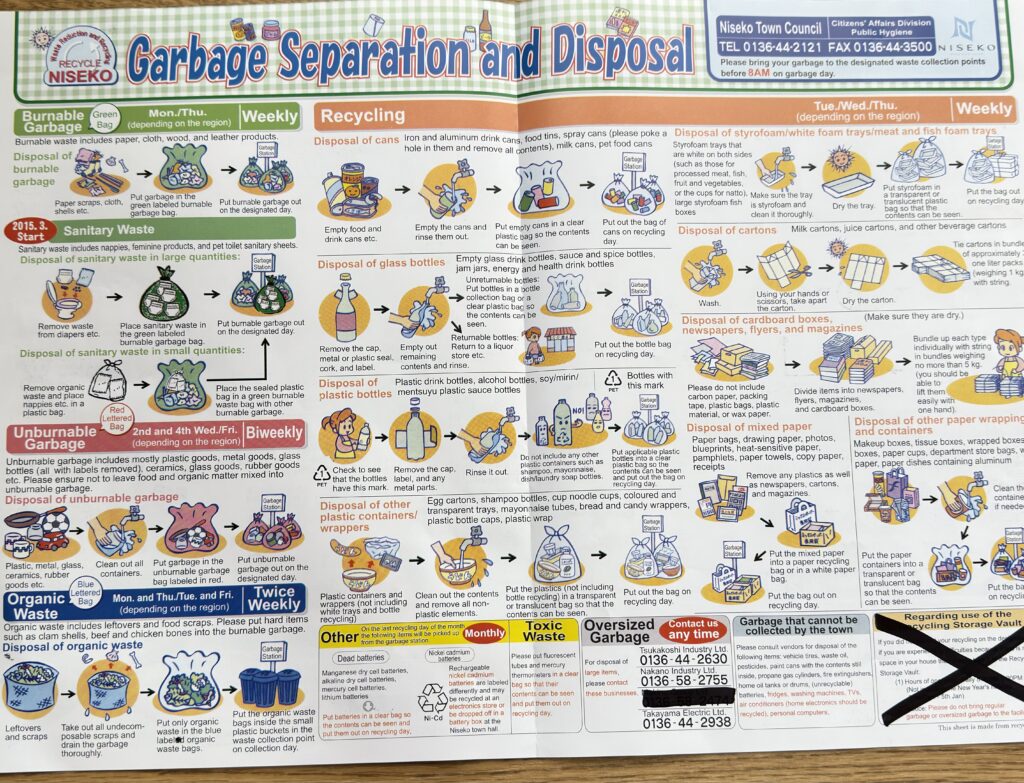
Niseko Town OfficeYou may be able to get a “Garbage Separation and Disposal” guide.
Some visitors find it helpful because it explains categories and disposal in a clear format. Often it includes an English side, so it’s great for long stays.
Availability may vary. If you can get it, keep it in your room and check it when you’re unsure.
Extra Tips: Bag Prices & Apps (Long Stays / Hosts)
Bag price noteNiseko bags can feel “smaller and pricier” than Kutchan.
Always buy the correct town’s official bags and check the latest official price pages (linked above).
Recommendation: install a sorting/calendar app (example: “San-a-ru / さんあ〜る”).
It helps guests quickly answer:
• “What trash day is today?” • “What category is this item?”
App availability and calendars depend on municipality settings. Final rules are always: this property’s trash station / designated bags / local official rules.
San-a-ru (App Store)Copy & paste line for your check-in guide:
If you’re unsure about sorting or collection days, please check the “San-a-ru” app.
Niseko trash rules look complicated at first, but you only need these 3 rules:
① Confirm your town → ② Use your building’s trash station → ③ Food waste in a separate bag.
If you’re unsure, it’s not your fault—the rules are detailed. Check the official links and posted signage, and you’ll be fine.

 English
  Japanese